
American parenting in the 1960s seemed rather simple, at least for average middle class white parents. Incomes were rising for all social classes. 90% of us were doing better than our parents, even if we struggled in school. We mostly felt we could pretty much count on the schools to prepare our children to be a member of the middle class. Besides, having a college degree only meant a 20% higher salary on average. No big deal. Advanced critical thinking skills, creativity, emotional intelligence, strong communication, executive function–those were already very nice to have. But if your child didn’t happen to develop them at home or in school, there were still functioning political systems and nice middle class jobs waiting for them–and those jobs would stay there through retirement… or so we thought.
‘60s parents weren’t “intense” or “helicopter parents” like we are because with strong alignment between what schooling provided and what the society demanded, the future seemed easy.
Complexity broke that. Globalization, the spread of personal computers, cell phones, industrial robots, de-unionization… All of those (and more) raised the economic stakes in schooling. By the 1980s, if you never learned the complexity skills I named abovel–and most middle class Americans did not–there were not as many solid middle class jobs waiting there to support you through retirement.
What those ‘60s parents didn’t predict was that the third industrial revolution–aka the digital revolution–could just “hollow out the middle” with no warning. That means making the skills of the mid-skilled worker almost as useless as the skills of the low-skilled worker. A lot of the kids with only high school degrees who grew up in the 1960s ended up dropping out of the workforce entirely as decent middle class jobs disappeared and the ones that took their place were for less pay and little respect. People with only average degrees and average skills became less economically secure than their parents with similar degrees and skills. Meanwhile, the better educated ones generally still had brighter futures.
When a new generation of parents saw what was happening, we understandably got more “intense” about parenting. School wasn’t going to do it alone. Suddenly there was a new buzzword in the 1980s–”Parent involvement is what makes the difference!” schools told us. Most college-educated parents didn’t fret. Becoming intense for our children’s sake felt like a fair and worthy challenge that we could rise to. If you could get your child into a decent college, there were still a lot of decent middle class jobs available for you.
But now AI has made us all into ‘60s parents again. We have no idea what the working world will be like for our kids. Some college educated American parents still assume that four years in a high quality college will be a ticket to doing as well as they did. But some of us correctly sense that this is changing every day.
Roy Amara coined an adage that has proven true time and again. It’s called Amara’s law and it goes like this: “We tend to overestimate the effect of a technology in the short run and underestimate the effect in the long run.”
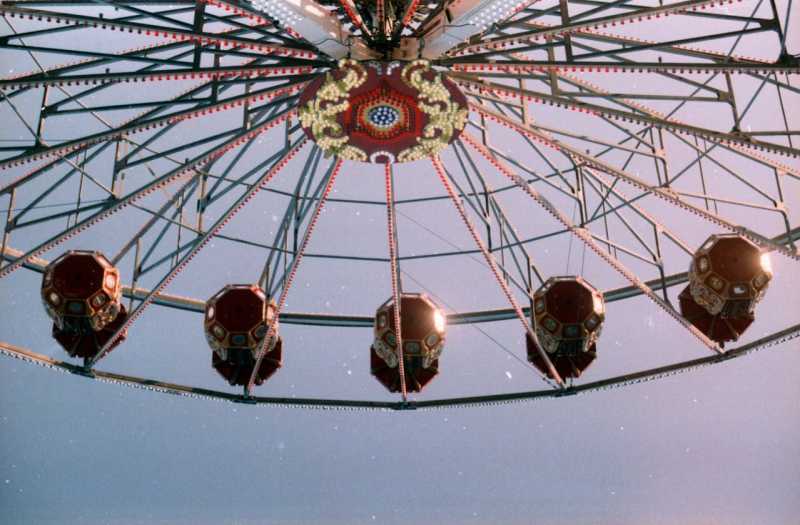
The rise of AI is being called the Fourth Industrial Revolution for a reason. It’s revolutionary, which is nothing new. We’ve already been around this Ferris Wheel. We know what happens, and we know it’s a terrible ride for parents.
To be simplistic, the first industrial revolution was powered by mechanization, the second by automation, and the third by digitization. The fourth one is…not yet fully understood. We only know that it’s happening and that AI is a big part of it. Its biggest effects are not the small shifts happening to our lives right now. The real impact of AI will be visible in about 30 years, when our kids are in the labor force. And, if it’s like the first three revolutions, this will be massive beyond our present day comprehension.
Each of these revolutions do one basic thing–they raise the skill level needed to be in the middle class. In other words, they shrink the middle class. They always increase the importance of higher level thinking and emotional skills. They always raise the bar for what “high skills” actually mean. They always make it harder for parents to guarantee their children a life as good as their own. In other words, they always hollow out the lower-middle class and drive a wedge between them and the upper middle class.
So here’s the big question: Who’s next? Who’s the “lower-middle class” now? What level of skill is going to be hollowed out in the fourth industrial revolution? Is the average college graduate safe? It certainly doesn’t seem that way. Throughout most of history, the “middle class” referred to the top 12% of the society, excluding the elite. We might be reverting back to that.
If the pattern from those last three industrial revolutions continues a fourth time, then many people who think they’re doing the right things to be as economically secure as their parents will grow up and find that they’re not.
Experts are saying that creativity, critical thinking, emotional intelligence, communication skills, executive function skills, and digital literacy are going to be vital in the future world of work. Meanwhile, businesses, HR departments, and other institutions are complaining that the average college graduate does not emerge from our schools with these skills. In fact, only 31% of American college graduates possess the critical thinking skills required to read at the college level.
In other words, parents, they’re saying it’s up to you. Somehow, YOU need to step it up. Our schools cannot suddenly start reliably producing these advanced level thinking skills. They are wildly ineffective at the skills of the future for most kids. They’re still stuck on getting kids to achieve at a very basic level, and they’ve been treading water there for the last 50 years with little to show for it. Most of our 17 year olds still read below the 6th grade level. It’s not realistic to count on our schools for even higher level thinking skills of the future. Even when those thinking skills are developing in schools, it’s also because of what highly educated parents are doing at home to help make schools seem more effective.
You might be thinking, “But hold on, those other industrial revolutions turned out pretty good, in the long run. We must have adapted successfully.” True, but there was a big difference with the first two industrial revolutions. Communities stepped up so parents didn’t have to do it all alone.
After the first industrial revolution made basic literacy and numeracy an absolute must for the middle class, communities sparked the grassroots common schools movement, that made primary schooling free and universal over the course of the 19th century. After the second industrial revolution made high school an absolute necessity, there was the grassroots high school movement, which put a public high school in every community. Between 1910 and 1940 an average of one new high school was built each day with local community funds. For the first time in history, parents didn’t have to find the money for expensive boarding schools far away, they had a free high school in their own community. Communities got more intense about education so parents didn’t have to.
But after the 3rd industrial revolution, the communities did not respond. And we’re living with the consequences of leaving it up to parents right now.
Forty five years later, we’re sizing up a Fourth Industrial Revolution and frankly nobody knows what happens next. So far, it doesn’t look like our communities are coming to help parents with the rising burden of complexity this time.
So parents… do we know how to teach our children deep critical thinking skills? Do we have the time and energy and the skills to foster advanced strong emotional intelligence? How about creativity–specifically the kind of advanced creativity that is considered the pinnacle of thinking skills? What are we doing about executive function, communication skills, and “gifted” levels of literacy? If our child’s school isn’t getting all that done for our kiddo, can we step up where they fall short?
Without the actual skills that the future is demanding, the college diploma is most likely becoming just a very expensive piece of paper.
Top social scientists like Thomas Piketty, Lawrence Katz, Claudia Goldin, Benedikt Frey, and Deron Acemoglu, have assured us that our parental stress is all “part of the cycle”. Eventually, something’s going to have to give and there will be some kind of educational reckoning with the new level of complexity. The new skills demanded by the future will get their supply one way or another. It’s a comforting thought… sort of. But it’s not at all clear what that will be, when that will happen, and what to do in the meantime.
So what can we do? In my next posts, I’ll discuss what parents can do individually and what we can do if we come together as communities.
 Our Superpower